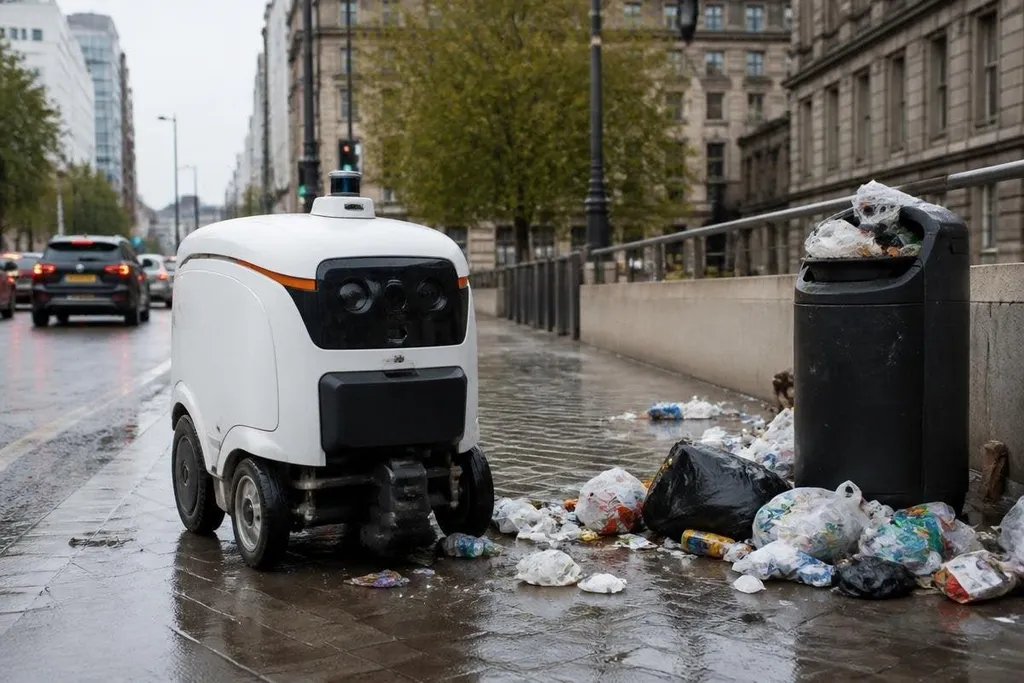
A waste robot can sort items, move bins, or collect litter without a person steering every step. The harder part is making that work on wet streets, mixed rubbish, blocked paths, and changing traffic.
Quick read
- Cameras and grippers can sort waste by material, shape, or location.
- Autonomous collection vehicles need clear routes, safe stopping rules, and regular human checks.
- The robot helps most when the city already has a reliable waste system.
Where robots can help
Waste work has many repeated tasks. A robot arm can pick items from a moving belt, while software checks camera images and sends the arm toward a chosen object. Small mobile robots can carry a bin between a collection point and a larger vehicle.
The useful gain comes from keeping people away from the dirtiest or most repetitive jobs. A person may still load equipment, clear jams, or inspect a rejected item, but the robot can handle the same motion for long periods without losing focus.
Street cleaning is a different task. The robot must detect litter against pavement, avoid bicycles and pedestrians, and stop when an object is too large or unsafe to move. That calls for cameras, distance sensors, drive motors, and a control system that can respond when the street does not match its map.
Sorting is easier in a facility than on a street
A recycling plant gives the robot fixed lighting, known belt speeds, and a defined work area. Those conditions help camera software tell a plastic container from paper or metal. They also let engineers place guards, emergency stops, and service access around the machine.
A city street removes much of that control. Rain can cover an object, shadows can change its shape, and a plastic bag can move in the wind. The same machine may need a slower speed and more checks outdoors than beside a conveyor.
This difference matters for city budgets. A sorting arm can stay in one building, but a street robot needs batteries, charging space, route maps, remote supervision, and a plan for blocked paths. The machine may cost less to run during its working hours, yet the wider system still needs people.
A city deciding on waste robots needs to separate a sorting-line trial from a street-collection trial. Waste robotics coverage from Robot24.com can name the robot, site, waste mix, test date, and measured result, giving you a better basis for judging claims before the collection problem begins.
The collection problem comes first
A sorting robot cannot fix waste that arrives mixed, damaged, or contaminated. If food waste sits with paper, the material may need extra handling before a machine can identify it.
If bins are placed in the wrong location, an autonomous vehicle spends its time finding the work instead of doing it. That makes the collection route the main test. The city needs to know where the robot can travel, how it will cross roads, what happens when a person enters its path, and who takes control after a fault.
These details decide whether the machine helps workers or adds another system to maintain. Human supervision also has a cost. Someone must watch alerts, answer unusual cases, inspect the robot, and remove waste that the gripper cannot handle.
Remote control can reduce travel for that worker, but it doesn't remove the need for a worker.
What cities should check first
A pilot should answer practical questions before a wider purchase. Use this checklist:
- Define the task: name the exact waste job, location, working hours, and handoff point.
- Measure the input: record the item sizes, surface types, moisture, and material mix the robot will face.
- Set safety limits: decide when the robot stops, who can take control, and how staff reach it.
- Count the support work: include charging, cleaning, repairs, mapping, supervision, and software updates.
- Set a pass mark: choose a measured output, such as items sorted per hour or bins moved per route.
The pass mark should include failed picks and safety stops. A robot that moves quickly during a clean test may produce less useful work once people, weather, and damaged waste enter the route.
I'd support waste robots first in fixed facilities and controlled collection points. Outdoor street work can follow when a city has clear routes, trained staff, and records that show the robot handles real faults without slowing the service.
The next useful result won't be a polished demo. It will be a public trial showing how many bins or items the robot handles, how often a person steps in, and what happens after the first blocked route.